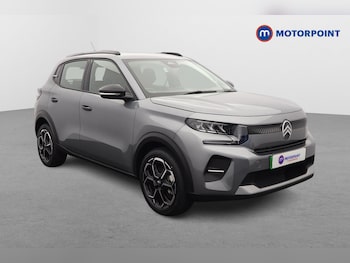
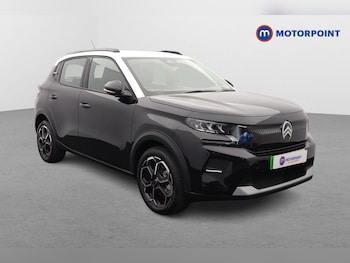
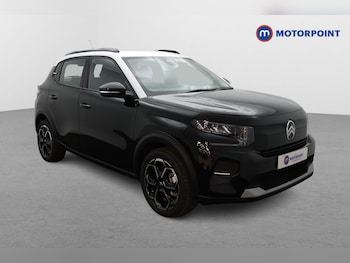
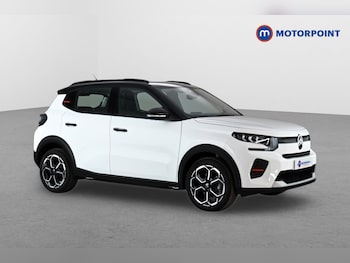
Citroen e-C3 review
The Citroen e-C3 is refreshingly basic and might just be the answer if you’re looking for a great budget choice to switch from petrol to electric motoring.

Author: Charlie Harvey
30th Apr 2026 – 9 mins read
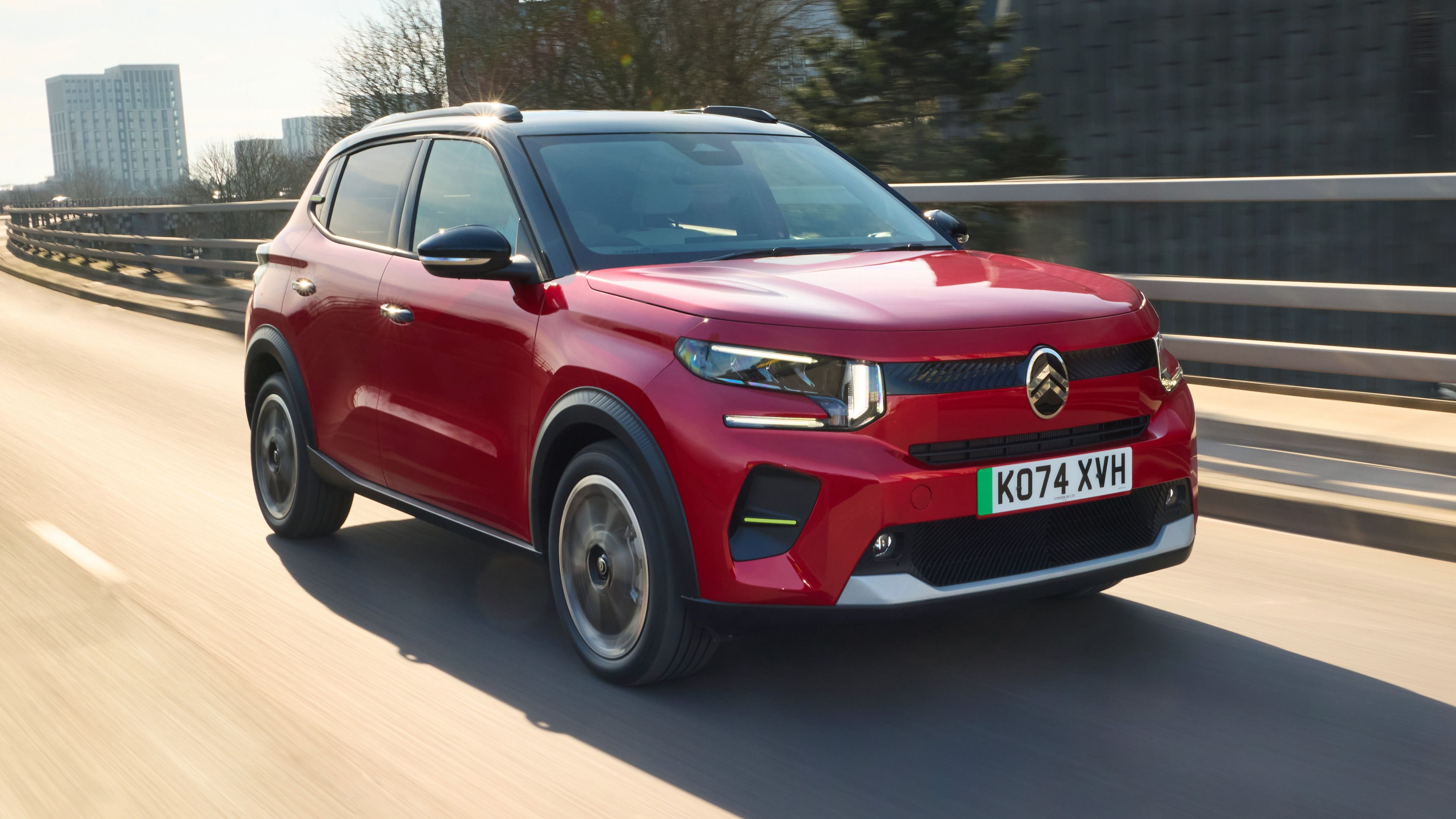
The Citroen e-C3 has been a significant car for the French marque, making electric mobility accessible for the masses – in some ways it's got the same spirit as iconic Citroen models like the 2CV. It might seem strange to compare them, but like the 2CV, the e-C3 is pleasingly basic – while the 2CV was made simply to get France mobilised after the war, the e-C3 was designed as an affordable model to move people towards electric mobility. Despite its simplicity, it gets all the core EV ingredients right. The e-C3 is also comfortable, great value for money and its electric motor seems better suited to the platform than the petrol engine does. It goes up against small EVs like the Dacia Spring and Chinese rivals like the Leapmotor T03 and BYD Dolphin Surf. However, the Spring fails to feel quite as substantial and car-like as the e-C3, and while the Leapmotor and BYD offer a lot for the money, some buyers might prefer the security of owning a car from a better-known brand like Citroen.
Pros
- Simple and easy for new EV owners
- Fashionable SUV-like stance with small proportions
- Smoother drive than the petrol
Cons
- High load lip in the boot
- Cheap interior plastics
- Not much functionality on interior display
Interior:
Dashboard & tech
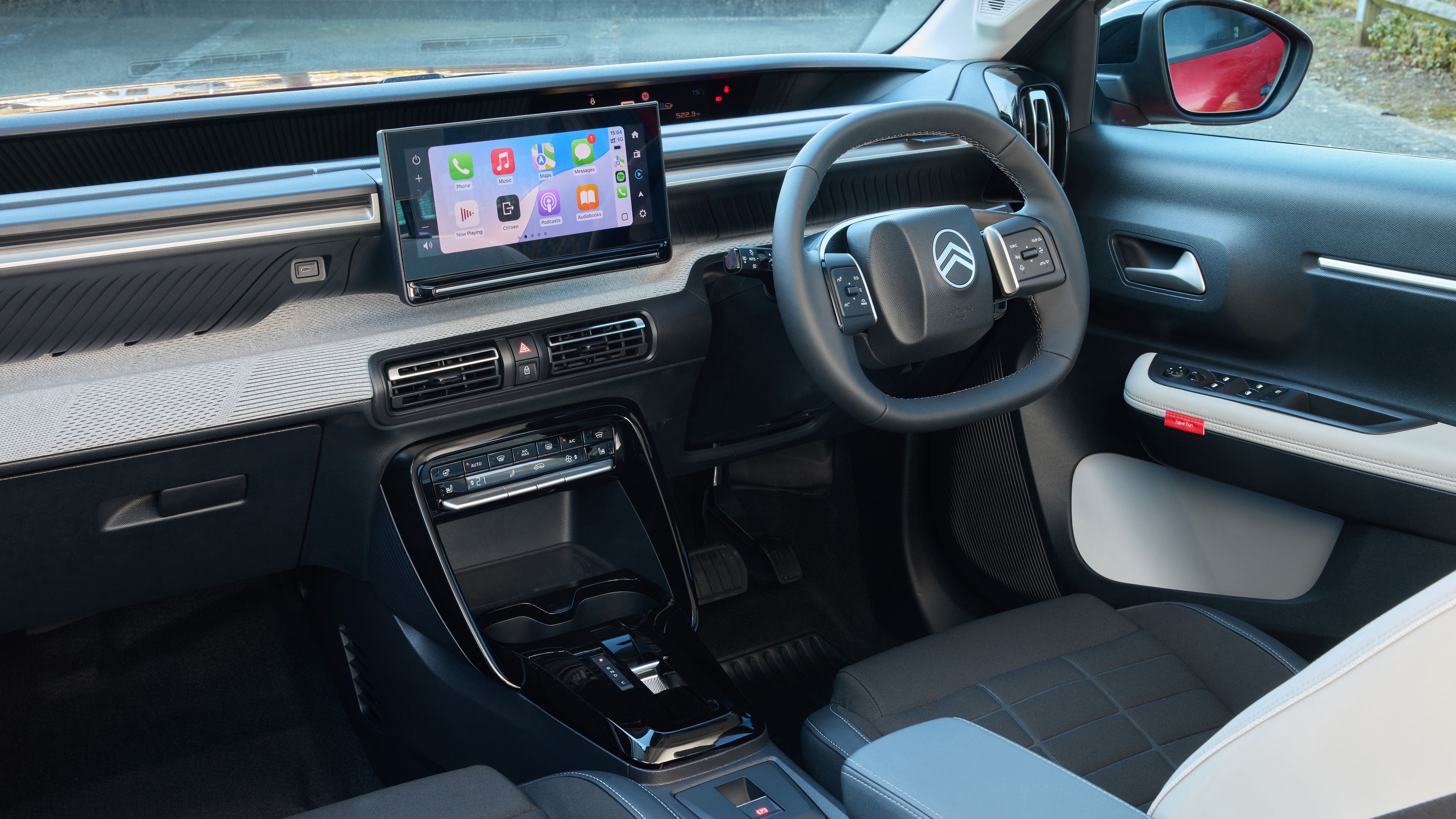
The Citroen e-C3’s dashboard isn’t exactly a showcase of tech, but that’s actually rather refreshing in a world of EVs with overly complicated screens and systems which can feel overwhelming. There’s a very small display in front of the driver with key info such as the car’s speed, battery level and even the road speed limit. It’s uncluttered and easy to read.
On Plus models and above you get an infotainment screen in the centre, and while it gets the basics right with wireless Apple CarPlay and Android Auto connectivity, it’s a shame there aren’t more configurable settings within it, such as the ability to limit charging to 80% (doing so helps prolong the life of the car’s battery, and is a feature available on many other EVs).
Comfort
Throughout its history Citroen has been synonymous with comfort, and that’s still the case with the e-C3. It comes with the brand’s Advanced Comfort seats, which prioritise softness over hard support. That’s what matters to the majority of drivers, and the e-C3 isn’t really a car you’d want to drive hard and aggressively, so they’re a good fit here.
Quality
Citroen has made no bones about the fact that the e-C3 is a budget-friendly car, so don’t expect top-notch materials on the inside. As such, there are quite a few scratchy black plastics, and the interior is rather simpler than that of many other cars. In all honesty, though, it’s not a terrible place to be, and as long as you have modest expectations you shouldn’t be too disappointed. On the move there were no noticeable squeaks or rattles, so while material quality might be mediocre, build quality is good.
Another aspect that doesn’t exactly scream high quality is the light feel to the doors and boot lid – again, this can be forgiven for the price, so don’t expect the satisfactory ‘thunk’ you might get from more expensive cars.
To make things a little more quirky, fun and ‘Citroen’, little motivational message tags on each door card read ‘be cool’, ‘have fun’, ‘be happy’, and ‘feel good’. Yes, some might find them a little cheesy and silly, but if you want to manifest good vibes perhaps it’ll do the trick!

Practicality & boot space:
Interior space
The Citroen e-C3 has an upright stance akin to that of an SUV – it’s no coincidence given the current popularity of that body style, and it means that compared to the previous-generation C3, the latest one looks more substantial on the road. It’s unashamedly boxy, so it’s more spacious than you might expect inside, with a reasonable amount of legroom for front and rear passengers.
The e-C3 gets ISOFIX points so mounting a child seat should be no problem. The doors open nice and wide, making it easy to get a child or toddler in their seat. The doors are also relatively short, so they’re easy to open wide enough in tight spaces.
Boot space
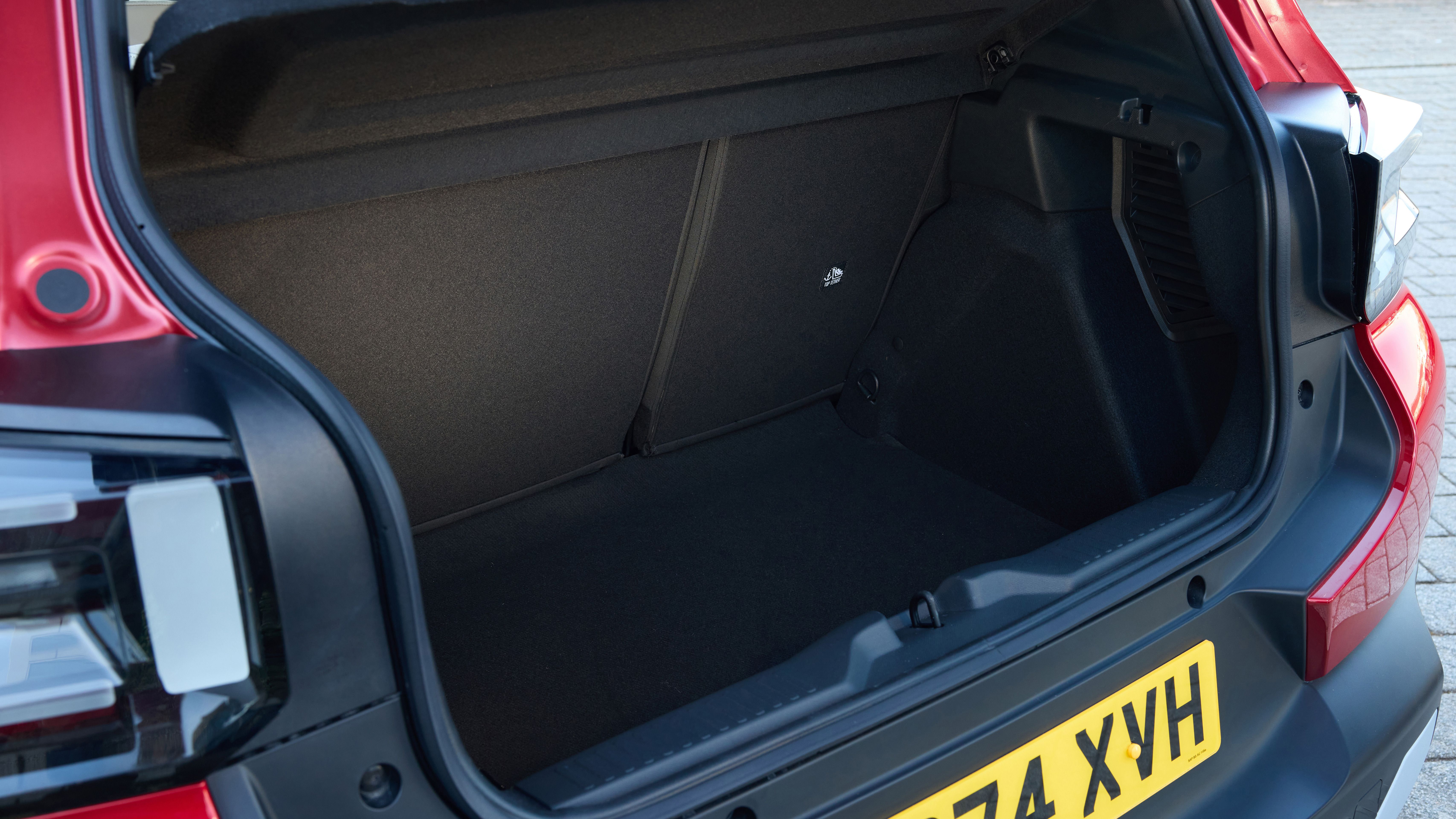
The e-C3’s boot isn’t particularly large, but it should be usable for the average family food shop at 310 litres. The e-C3 is not a car that’s designed with long journeys in mind, so you’d struggle to get more than one small suitcase in the boot.
Fold the seats down and you free up a total of 1188 litres of space which could come in useful for doing trips to the dump or other errands requiring more space. One gripe we had was the high load lip when accessing the boot, however, as that could make getting heavier items in the back more challenging.
Importantly, though, the e-C3’s boot size is identical whether you go for it or the petrol and hybrid versions – often electric versions lose some of their capacity due to battery packs taking up space in the floor.
Versatility
While there are a handful of useful storage shelves here or there on the inside of the e-C3, as well as a small glovebox, there aren’t any more than the average car in the segment. There are lots of USB-C fast charging ports all around the cabin, though, so there should be no arguments about who gets to charge what and when!
Driving:
Driving experience
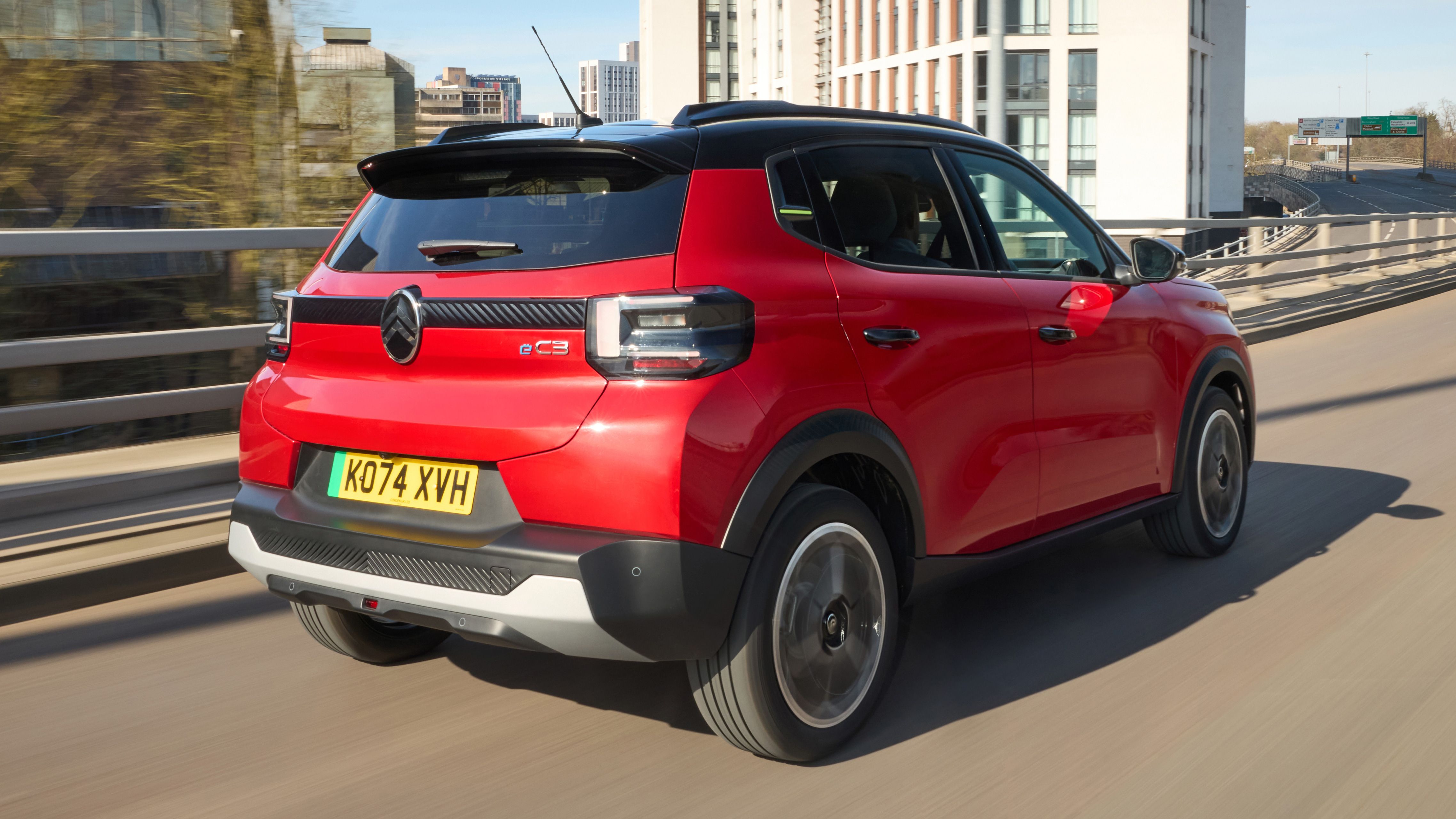
The Citroen e-C3 is the perfect car if you’re looking to swap from an older petrol-powered model into an EV, because rather than trying to dazzle you with overwhelming EV-specific tech and readouts, everything feels familiar right off the bat.
If you’re considering a petrol C3, you might find the gruff engine note ruins the serenity of the cabin when you put your foot down, but the electric motor is much quieter and suits the platform. That said, it’s not the quietest electric motor out there – we experienced a fair bit of motor whine compared to more expensive EVs – but it’s not distracting and still makes for a more refined experience than in the petrol car.
Another area where the e-C3 excels over its petrol-powered counterpart is in smoothness of power delivery. The e-C3 cuts out one of the most unpleasant parts of the petrol C3 – its vague manual gearbox. No gearbox means there’s no jolt as you cycle through the gears, which is also a plus over automatic versions of the petrol car.
The e-C3 feels easy to park and manoeuvre in tight spaces, though the high square bonnet can make things feel a little daunting when driving towards the crest of a particularly steep hill. It can be hard to place the side furthest from you at times on tight roads when compared to other hatchbacks, but that’s the price you pay for the SUV-inspired stance and is true of quite a few modern models.
While the previous C3 and petrol-powered versions of the latest C3 have offered comfort at the expense of driving feel, the e-C3 is a vast improvement. We don’t know if it’s because of the added weight of the batteries, but the car feels more planted on the move, where the petrol models can feel floaty and disconcerting. Despite that, the ride is still very comfortable, so the e-C3 feels well balanced.
Performance
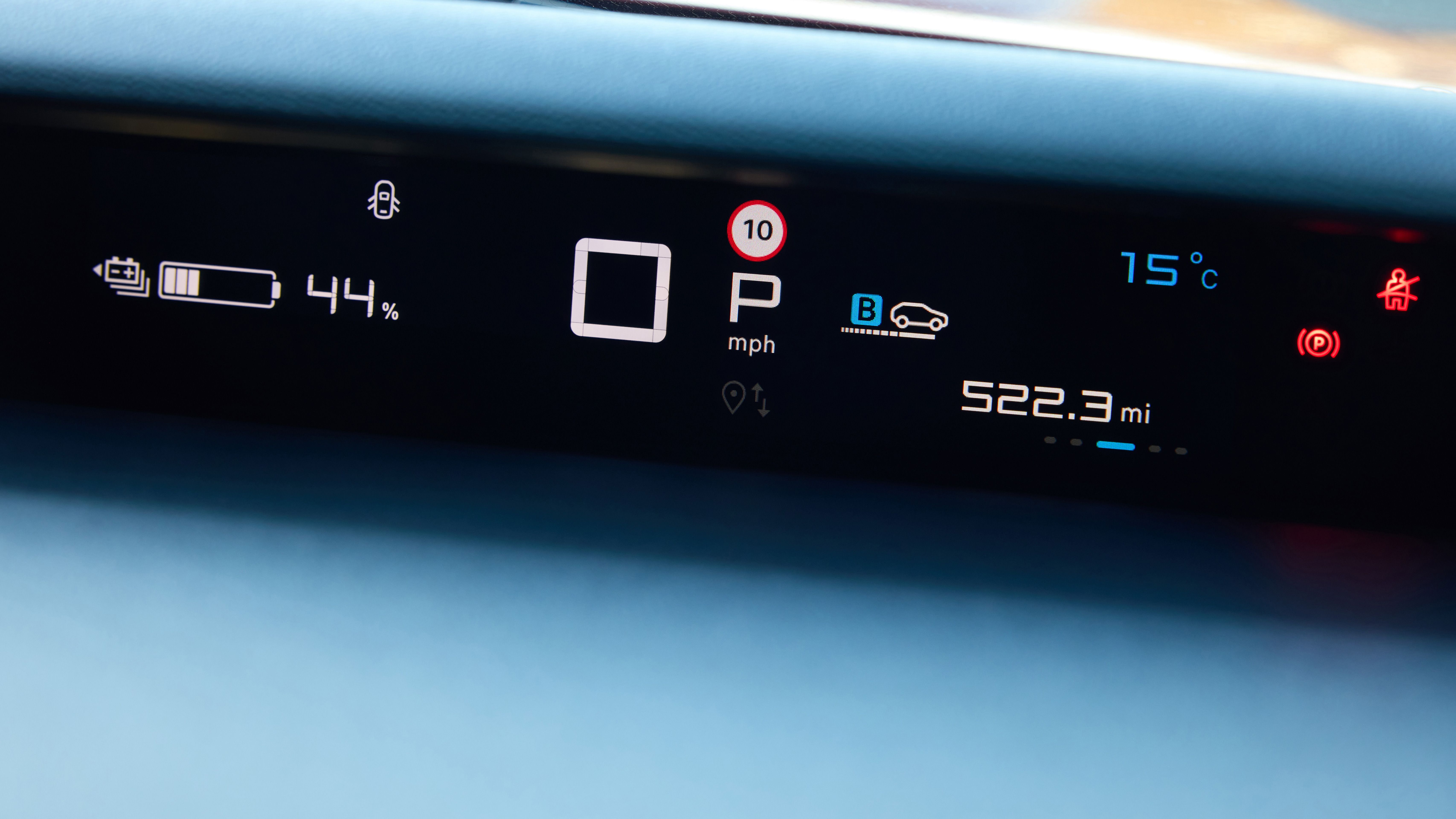
There’s 111bhp on offer in the e-C3 regardless of the size of the battery. That’s not a lot, but it never feels like too little in reality. 0-60mph takes 10.4 seconds, so you won’t get that break-neck acceleration EVs have generally become known for. That’s part of the appeal here, though, because power onset feels gentle and comfortable when you put your foot down.
Brake regen (the system that slows the car down as you let off the accelerator and feeds it back into the battery) isn’t too aggressive, and while there’s no ability to adjust it through different levels, there’s a button marked ‘C’ on the gear selector which tones it down for when you’re cruising on the motorway. The difference is subtle, but it just means that if you let off the accelerator at a cruise, the car won’t slow itself down as harshly.
In some cars, the aforementioned system is known as ‘one-pedal driving’ because you can expect the car to come to a complete stop when letting off the accelerator without using the brakes manually. That’s not quite the case here, but if you’re moving from a traditional automatic petrol car, it will all feel very familiar. If you’re already well-versed when it comes to EVs, and have got used to ‘one-pedal’ driving, you might be want to look elsewhere.
Running costs:
Fuel economy & CO2 emissions
We test drove the e-C3 in Urban Range guise with the smaller 30kWh battery and a quoted range of 130 miles to a charge. We’re happy to report that during our drive over a mix of motorway, city and country-road driving, that figure seemed quite realistic. The weather was sunny and dry in Marseille in southern France, however, so the figure may not be so accurate on a cold and rainy day in the UK. There’s no option for a heat pump to keep the battery at optimum temperature, so range will inevitably suffer in the winter months.
Standard Range cars get a 44kWh battery and a quoted range between 201-202 miles on a charge, which we think would make all the difference if you want to do the occasional trip further afield.
As it’s an EV, the e-C3 boasts zero emissions from the tailpipe, which will appeal to the environmentally conscious.
Reliability & warranty
French manufacturers such as Citroen may have suffered from a bad reputation in terms of reliability decades ago, but that’s no longer deserved. In fact, the powertrain used on the e-C3 has been tried and tested on many other cars under parent company Stellantis, and we’re yet to hear of any horror stories.
As such, Citroen is so confident in its e-C3, that in addition to the three-year, 60,000-mile warranty (pretty much industry standard), its ‘Citroen We Care’ extended warranty kicks in so long as you keep your car serviced annually via a Citroen dealer up until the eighth year of the car’s life (or 100,000 miles). The good news is that this warranty transfers to the subsequent owner if the car is sold, and given that the e-C3 launched in 2024, there should be many still under warranty on the market should you buy used, and check if the car has been serviced at Citroen at the required intervals if you’re buying one later down the line and want to benefit from the ‘We Care’ warranty.
Safety:
Safety features
The latest Citroen C3 and e-C3 comes with handy features such as traffic sign recognition, lane-keep assist and autonomous emergency braking as standard, as well as driver attention alert, so while it’s a budget model, it’s not completely spartan when it comes to safety. That said, it’s yet to be tested by Euro NCAP, so the efficacy of its design and tech in a crash is yet to be proven.
Trims & engines:
Trim levels
The Citroen e-C3 is available in two trims: Plus and Max
- Plus: Plus models are actually the mid-range option in continental Europe, as Citroen skipped the base-spec You! For the UK market. That means it’s got everything you’d conceivably need, including 17-inch alloys, LED headlights with automatic high beam, electric windows, rain-sensing windscreen wipers, lots of USB-C ports, manual air conditioning, cruise control and rear parking sensors among many other features.
- Max: In addition to the above, Max models get front fog lights, a 3D sat nav system (though you might not care about this, given wireless Apple CarPlay and Android Auto has this covering via your smartphone). There’s also a wireless smartphone charge pad and a heated steering wheel, front seats and windscreen, which should come in handy on cold winter mornings. Automatic climate control, tinted windows and a reverse camera are also thrown in.
Engines
There’s just one motor in the e-C3 – a 111bhp unit. This can be had with either the 30kWh battery in ‘Urban Range’ models which offers enough range for driving around town (130 miles), while the ‘Standard Range’ has a larger 44kWh battery for up to 202 miles if you want to occasionally travel further afield.
The 30kWh models can charge at up to 7.4kW via an AC home wallbox charger, which will take 2 hours 50 minutes to charge from 20 to 80%. The larger battery model can charge at up to 11kW, which takes 4 hours 10 minutes to do the same.
The Standard Range car gets 100kW rapid charging capability, which means it can be topped up at a public charging station in 26 minutes. 30kW rapid charging is optional on the smaller battery model, and takes 36 minutes. You should bear this in mind if you plan the occasional drive further afield, or frequently need to charge up quickly, because being limited to slow AC wallbox charging speeds isn’t really feasible on a long trip.